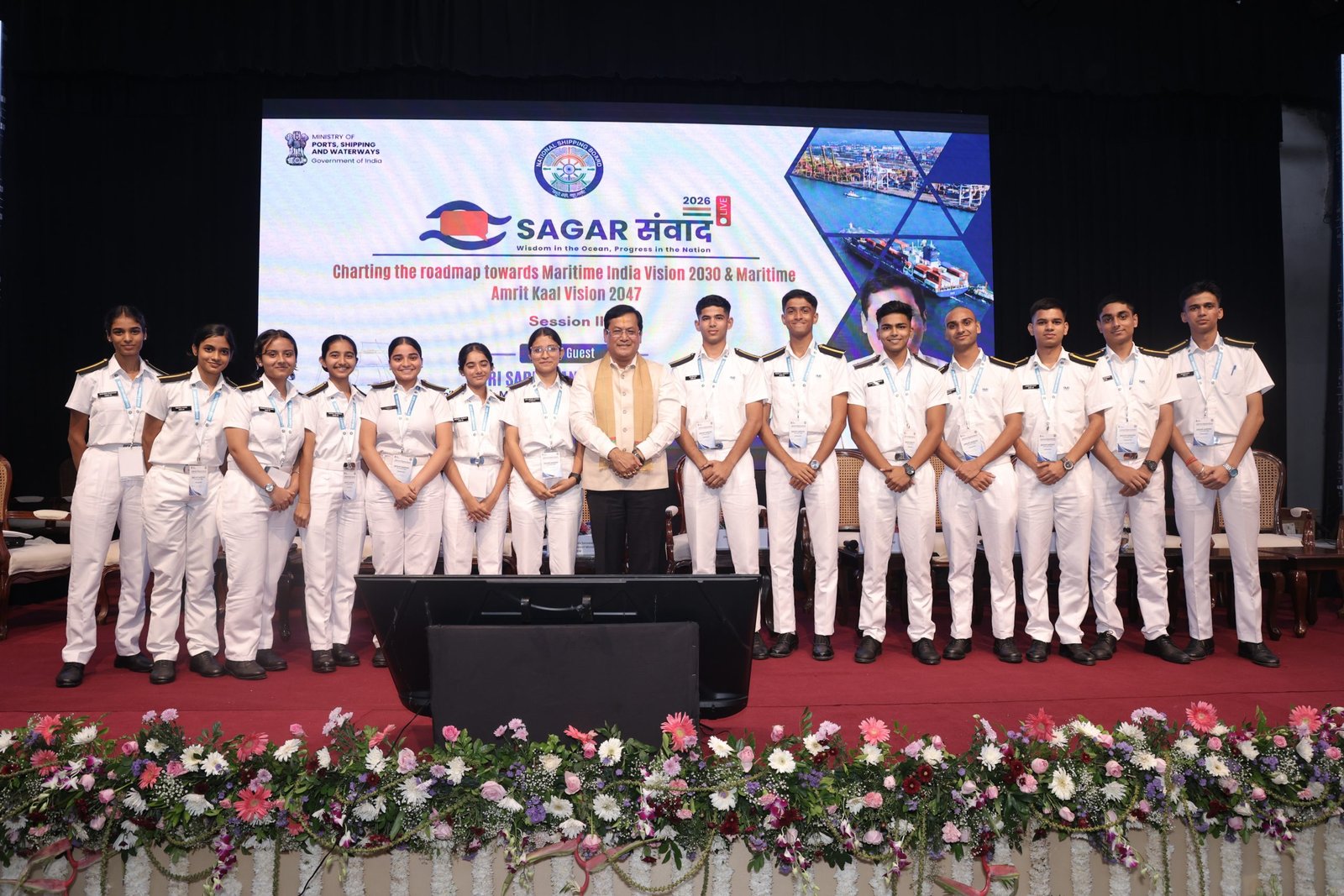
More than 80 cadets from the International Maritime Institute (IMI) attended Sagar Samvad 2026, a flagship maritime conference organised by the Directorate General of Shipping and the National Shipping Board in New Delhi. Bringing together maritime leaders, policymakers, shipowners, seafarers’ unions and government officials, the event served as a key platform for discussions on the future of India’s maritime sector.
Aligned with the goals of Maritime India Vision 2030 and Maritime Amrit Kaal Vision 2047, the conference focused on strengthening India’s maritime self-reliance, expanding the national merchant fleet and enhancing opportunities for Indian seafarers.
The event was attended by distinguished leaders including Shri Sarbananda Sonowal, Union Minister for Ports, Shipping and Waterways; Shri Shantanu Thakur, Minister of State; and Dr Mansukh Mandaviya, Union Minister for Labour and Employment.
Key Discussions and Takeaways
Expanding India’s merchant fleet
A major highlight of the conference was the National Shipping Board’s proposed five-point roadmap to add 100 vessels to India’s merchant fleet over the next five years. The initiative seeks to reduce India’s dependence on foreign shipping lines, which currently results in an estimated USD 75 billion in annual freight outflow. A stronger Indian fleet is expected to create more employment and training opportunities for Indian seafarers.
Fiscal and financing reforms
Industry experts discussed the financial challenges faced by Indian shipowners, including higher borrowing costs and tax-related disadvantages compared to international competitors. Proposed measures included competitive maritime financing, tax parity and greater utilisation of GIFT City (IFSC) for ship leasing and foreign-currency operations.
Strategic cargo partnerships
Stakeholders highlighted the importance of long-term partnerships between Indian shipowners and major importers of commodities such as crude oil, coal and fertilisers. These partnerships would provide assured cargo volumes, enabling shipowners to secure financing and invest in fleet expansion.
Seafarer welfare and workforce development
Discussions focused on enhancing training capacity, improving welfare measures and increasing workforce diversity. Dr Mansukh Mandaviya emphasised the need to position India as a global hub for maritime talent while preparing cadets for emerging sectors such as cruise shipping and specialised maritime services.
Strengthening the maritime ecosystem
The conference also showcased progress in shipbuilding, ship repair and container manufacturing. Shri Sarbananda Sonowal highlighted the positive impact of initiatives such as the Container Manufacturing Assistance Scheme, which is encouraging greater domestic production for the global shipping industry.
A valuable interactive session for IMI cadets
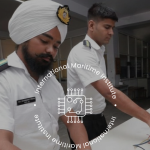
One of the most memorable moments of the event was the opportunity for 14 IMI cadets to directly interact with Shri Sarbananda Sonowal, alongside National Shipping Board members and senior maritime officials. The session allowed cadets to raise important questions on training opportunities, career pathways, recruitment practices, safety and welfare within the maritime industry.
Addressing concerns about sea-time opportunities after pre-sea training, the Minister highlighted efforts to expand India’s shipping fleet and create additional training berths. He also shared details about the upcoming training ship Swaraj Deep, which will accommodate around 200 trainees and help bridge the gap between maritime education and onboard experience.
When discussing recruitment challenges, officials reiterated that there should be zero tolerance for fraudulent placement practices and encouraged cadets to verify authorised recruitment agencies through the DGMA and report any suspicious activities through the E-Navik portal.
Questions on gender diversity prompted discussions around the government’s Sagar Mein Samman initiative and financial support schemes for women cadets, aimed at creating a more inclusive maritime workforce.
The interaction also covered seafarer safety in conflict-prone regions and various welfare measures available to maritime professionals and their families, reinforcing the government’s commitment to protecting and supporting India’s seafaring community.
Learning beyond the classroom
For IMI cadets, Sagar Samvad 2026 was more than a conference. It was an opportunity to witness national maritime policymaking in action, engage with industry leaders and gain valuable insights into the future of the sector.
As India advances towards its vision of becoming a leading maritime nation, platforms such as Sagar Samvad play an important role in connecting young maritime professionals with the leaders and ideas shaping the industry’s future. The experience reinforced an important message: the next generation of Indian seafarers will be at the heart of the country’s maritime growth story.
 IMI Cadets Attend Sagar Samvad 2026
  IMI Celebrates 80th Independence Day with Fervour, Patriotism and Maritime Pride
  B.Tech 22 and DNS 45 Orientation Session at IMI
  Building Resilient Cadets for Successful Maritime Careers
  ETO Career Roadmap: From Campus Training to Shipboard Operations


 VIRTUAL TOUR
 WhatsApp